Mammoth High School AP Environmental Science Class

As one of the few advanced science courses offered at Mammoth High School, Advanced Placement (AP) Environmental Science gives students a unique lens through which to study the complex ecological and land-management issues of the Eastern Sierra. While our local landscape serves as an incredible living laboratory, experiencing a completely different ecosystem is vital for a comprehensive scientific education. To bridge this gap, Alicia Chang, Science Teacher & Head Cross Country/Track Coach, applied for a grant from MMCF to seek funding for an immersive field trip to one of the Channel Islands and two Universities of California, scheduled for this past May. This trip allowed students to conduct hands-on research at the island’s UC research station and tour the UCSB campus to engage directly with environmental science professors, opening their eyes to future academic and career possibilities in higher education.

1. Tell us about the students that are in AP Environmental Science and why you wanted to take them on this field trip.
My AP Environmental science class is made up of mostly sophomores and juniors. I wanted to take them on this trip because it really exposes them to opportunities outside of Mammoth, both college and post-college. For at least half of the students in the class, these were the first colleges they had the opportunity to visit. It was especially good to see a CSU and a UC, so that the students would have the chance to compare the two. One of the pieces of advice I always give students likely on the four-year college track is to leave Mammoth, especially if they have spent their entire lives in Mammoth. They need to have the chance to explore life outside of our rural community. If they want to come back after four years, fantastic, but they need to leave our bubble to really know what they want. I hope that makes sense. By being able to go on a school-funded trip that allowed them to see MHS alum thriving at different universities ought to give them more incentive to challenge themselves by leaving Mammoth.
Not only seeing MHS alumni thriving at their various colleges is influential, but to hear about the different types of classes, clubs, and activities available to them has a great impact on our high school students. For so much of their lives, Mammoth happens to have a very limited repertoire of activities MHS students can participate in, especially outside of sports. By walking the college campuses, the students can see cultural clubs, volunteering opportunities, service projects, lab research, and many more opportunities to expand their educational experiences.
2. Where were you taking them and what opportunities were available to them on this trip?
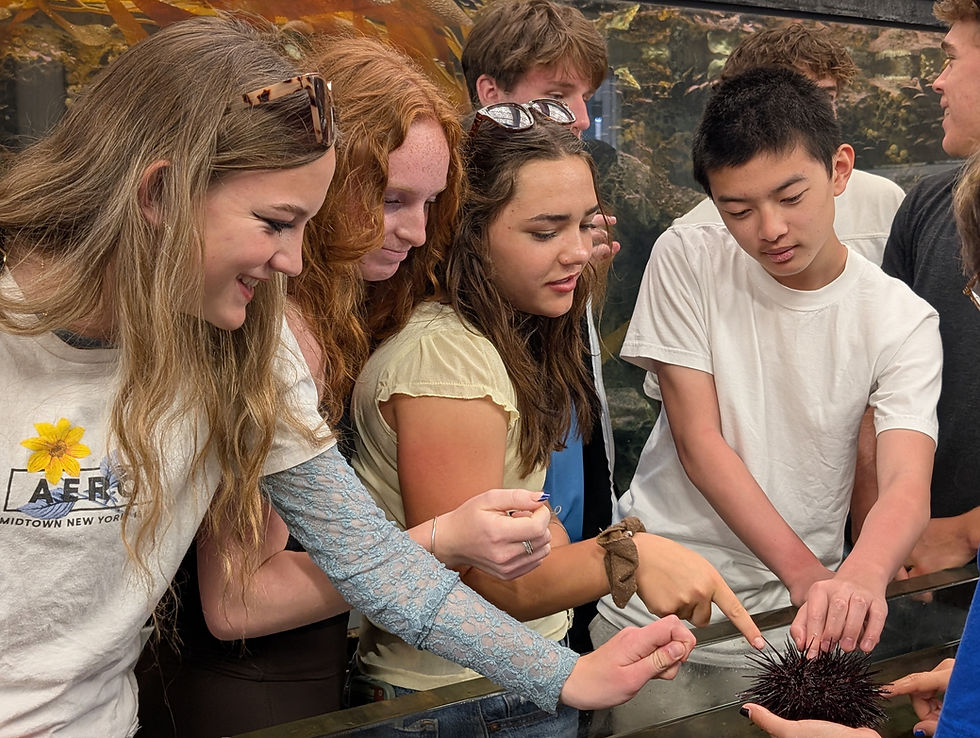
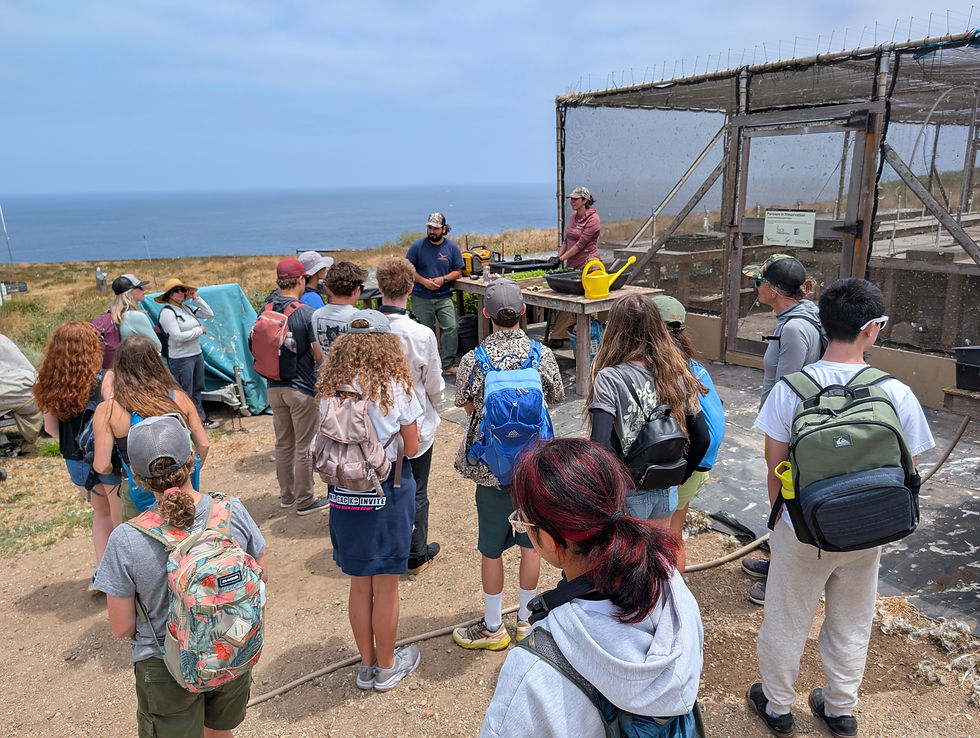
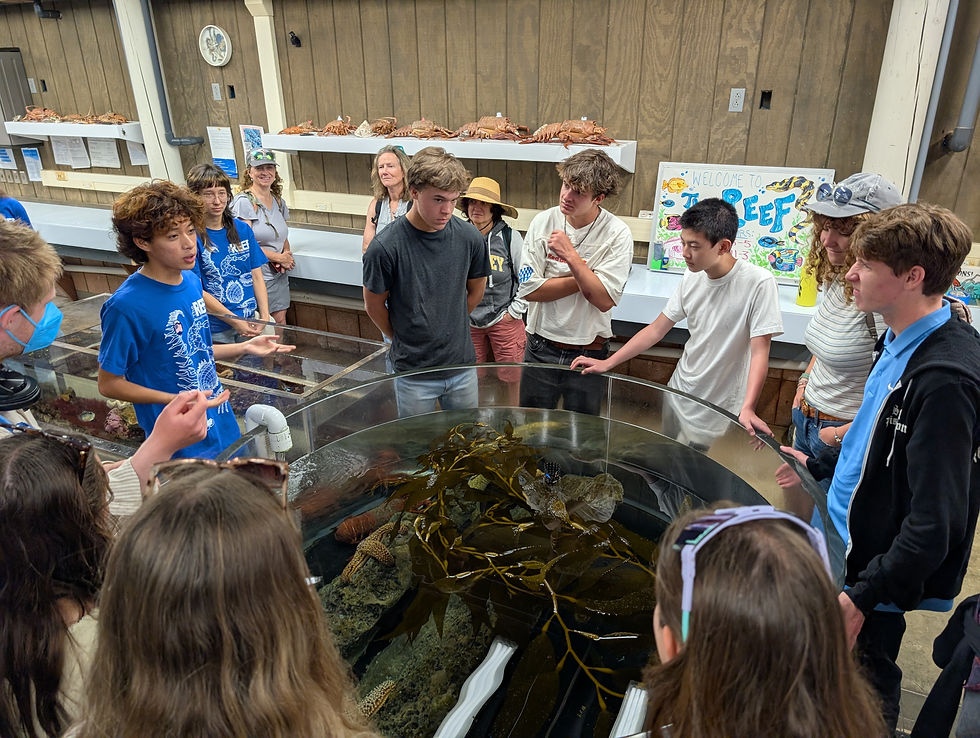
We went to UCSB, where we got a tour from a former MHS student in addition to visiting the REEF, their marine science outreach program. The REEF is run by undergraduates, giving the high school students a chance to see activities they might be able to participate in in college. We also went to Anacapa Island, one of the smaller Channel Islands. We ended our trip with a tour of Cal Poly SLO from yet another MHS student.
For these former MHS alumni college life has expanded their academic and personal lives in quite a few ways. They talked about how the habits they had as high schoolers allowed them to be successful in college. Not surprisingly, they spoke about academic integrity and how it takes hard work to achieve one's goals. A benefit of college is access to classes and professors, access that these students just weren’t able to have at MHS due to its size.
3. Were there experiences that will directly correlate to an advantage in pursuing higher education?
Visiting as many colleges as possible is an incredible opportunity for students to explore their options. Being able to see other MHS students succeed is huge. Seeing examples of successful former classmates is a big incentive for the students on the trip to challenge themselves. For students who feel stuck or stifled by the limited opportunities of Mammoth, they were able to see how big education and opportunities are even just a few hours away.

4. What happened on the trip that was unexpected?
The house we stayed in was isolated in the middle of a farming area. It was another chance to experience a different facet of environmental science. Agricultural practices are a huge part of the APES curriculum.
5. How did seeing environmental concepts in the field change the students perspective compared to learning from a textbook?
I've always thought environmental science is meant to be a hands-on experience. Living where we live and with the opportunities provided by MMCF, I've actually been able to make AP Environmental Science the type of class that's more about real life than book reading.

6. How was your grant funding used and was it a valuable experience?
The grant funding was used from the following: travel expenses, lodging, food, and ferry tickets. Thanks to MMCF, we were able to take MHS students on such an incredible trip without having the families pay, is… well, I am having a hard time putting it in words how thankful I am and the families are. The surprise the families expressed when learning this trip was completely covered, was monumental! I hope I am conveying the thanks to MMCF properly.

7. Why do you think it is important for organizations like MMCF to fund trips like this for high school students?
Referring back to the previous answer, being able to provide such a singular experience without cost to the families is something so incredibly unique to this community. MMCF's support of our students is unsurpassed.

8. Would your students have been able to experience this ecosystem without the grant funding? If not, what was the biggest barrier?
Funding is always hard. Furthermore, having it being organized as part of a class allows them extra experiences and connections I have access to that the individual families don't have.

9. Is there anything that you would like to convey to our MMCF donors?
I cannot express my thanks enough. It is very clear how much MMCF cares about its community and students.


Comments