EASTSIDE STUDENT CENTER - FLOUR POWER AND ALLEYWAY CAFE

The Eastside Student Center continues to be a cornerstone of transformation in the lives of our community’s youth. By bridging the gap between meeting basic needs—such as reliable meals—and teaching professional skills, ESC isn’t just supporting students, but empowering them to build their futures. We recently connected with Tyler McManus, Executive Director of ESC, to discuss the center’s ongoing impact. Here is what he shared.
1. For readers who may not be familiar with Eastside Student Center and the Flour Power and Alleyway Café programs, can you provide an overview of these programs, including the grades, ages, and socioeconomic demographics of the youth they serve?
Alleyway Café and Flour Power provide consistent, structured, and youth-centered programming that engages middle and high school students multiple times per week throughout the Fall 2025 semester (August–December). Alleyway Café operates Monday through Friday as part of Eastside Student Center’s after-school programming, offering a safe, supervised, and substance-free space for youth to gather after school. Students enjoy meals, snacks, and drinks while connecting with peers, building relationships with staff mentors, and participating in additional ESC programming such as academic support, creative activities, and leadership development. For many youth, regular access to food through the café is a critical support, helping reduce food insecurity while creating a reliable, welcoming routine.
Alleyway Café saw consistent daily engagement of 25–40 students, ultimately reaching 132 unique youth—far surpassing initial expectations. The High School Lunch Program additionally engaged approximately 8–12 students per day, every Tuesday, Wednesday, and Thursday, further supporting food security and providing another consistent point of connection with trusted adults. In addition, the Supper Program provided students with a free, nutritious dinner every Tuesday, Wednesday, and Thursday, ensuring consistent access to meals while fostering connection in a supportive environment.

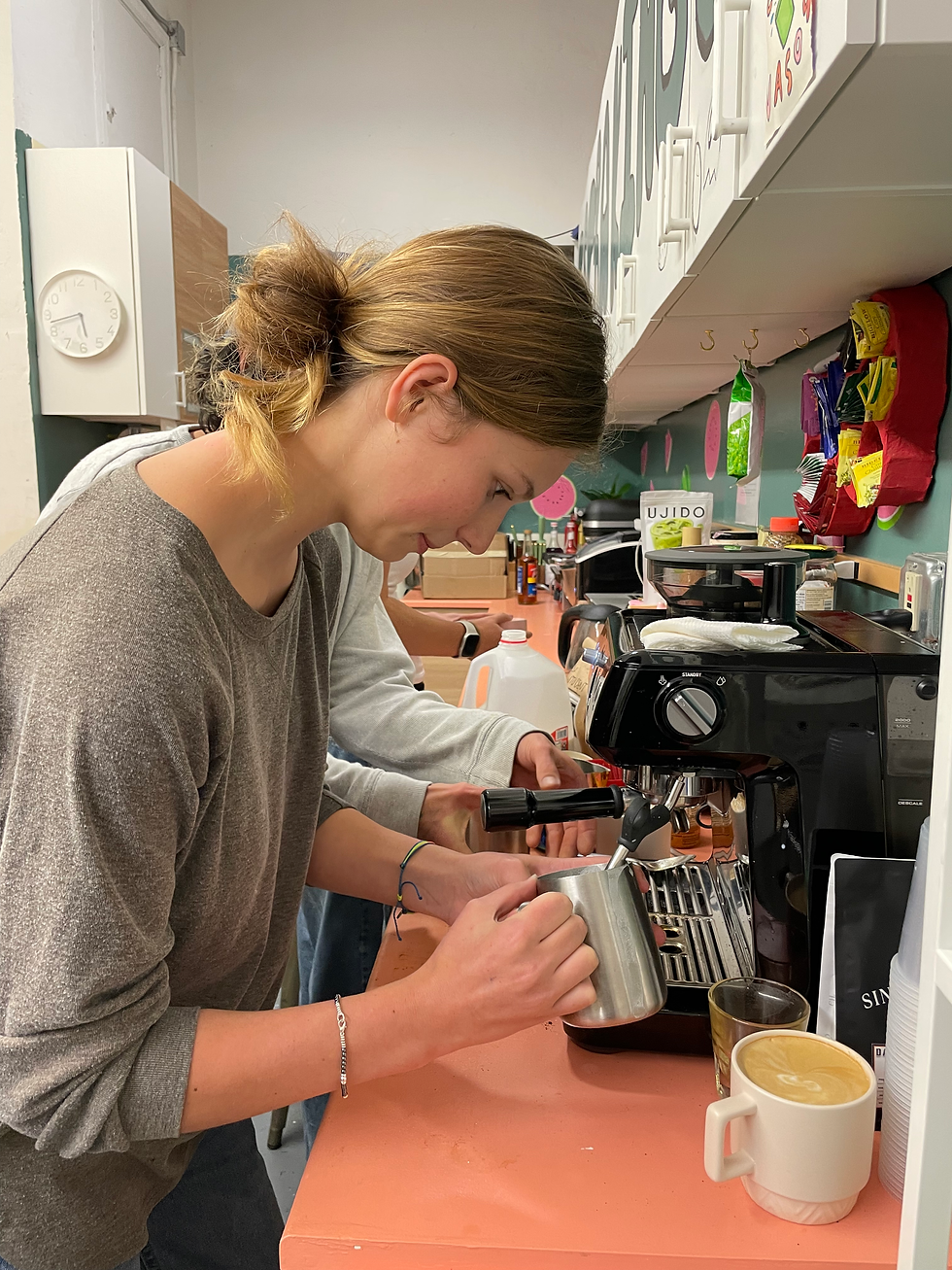
Flour Power operates as a six-week workforce development and vocational training program for a cohort of five high school–aged youth (grades 9–12). Participants engage in hands-on learning experiences related to food service and hospitality, including kitchen safety and food handling certification, production baking, barista training, customer service, teamwork, and time management. As youth master new technical skills and workplace expectations, they build confidence and begin to see themselves as capable, contributing team members. Real-world projects such as collaborative baking assignments and student-led bake sales reinforce both skill development and self-efficacy.
Throughout the semester, students demonstrate growth in both soft and hard skills. Flour Power participants show increased confidence in professional communication, responsibility, and collaboration, while Alleyway Café attendees demonstrate greater comfort accessing ESC resources, stronger relationships with staff, and more consistent after-school engagement. For youth who are initially shy or hesitant, the café environment provides a low-pressure entry point into leadership and skill-building, allowing them to build confidence through repeated positive interactions.
The addition of café elements—food offerings, specialty drinks, and a welcoming social environment—has proven pivotal in attracting new students and retaining participants. Together, Alleyway Café and Flour Power serve as both an access point to ESC’s broader services and as meaningful programs in their own right, strengthening youth confidence, supporting food security, and advancing workforce readiness.

2. Can you tell us about the demographics and socioeconomic breakdown of the youth you serve, including ages and grade levels? Where are they from?
Eastside Student Center’s Alleyway Café and Flour Power programs serve middle and high school students (grades 7–12) in the Bishop area, with a focus on older youth who often have fewer safe after-school options available. Students attend Bishop Union High School and Home Street Middle School, and then either walk or ride bikes or scooters to the Line Street campus after school.
During the Fall 2025 semester, Alleyway Café served 132 unique students at the Line Street location, significantly exceeding the projected reach of 80 youth. This represents a substantial increase from the previous year, when 93 students were enrolled at the same site. On a typical day, 25–40 youth participated in after-school programming, drop-in activities, and food service offerings. In addition, the High School Lunch Program served approximately 8–12 students per day, and the Flour Power program enrolled five students in its first cohort.

Participants range in age from approximately 12 to 18 years old. Many come from households experiencing economic hardship, food insecurity, housing instability, and limited access to extracurricular opportunities. A significant portion qualify for free or reduced-price school meals, and many are first-generation college-bound students. ESC intentionally serves youth who may be disengaged from traditional school-based activities and benefit from relationship-based, low-barrier programming.
The student population reflects the diverse demographics of the Eastern Sierra, including Latino/a/x youth, Indigenous youth, and multigenerational local families. Many students balance school with caregiving responsibilities, part-time work, or other family obligations. For these young people, having a consistent, welcoming, and substance-free space after school is not only supportive but critical to their well-being and sense of belonging.
3. How do students enroll in your program, and what is required of them?
Students enroll through Eastside Student Center and join an interest list. They are contacted when a spot becomes available. Flour Power is a six-week intensive program offered once per semester, and participants are required to attend at least four of the six sessions to successfully complete the course.
4. What skills and benefits do youth gain from participating in these programs?
Participants gain a combination of practical workforce skills, personal growth, and meaningful social connections. Through hands-on experiences in food service and hospitality, youth develop skills in kitchen safety, food handling, production baking, barista training, customer service, teamwork, and time management.
Real-world opportunities such as collaborative baking projects and student-led bake sales allow youth to practice leadership, problem-solving, and communication in authentic settings. These experiences strengthen both technical abilities and confidence, helping students see themselves as capable contributors.
Beyond vocational skills, participants develop essential soft skills, including responsibility, collaboration, and professional communication. They also build stronger relationships with peers and trusted adults, increase their comfort accessing ESC resources, and engage more consistently in after-school programming.
5. What positive impact does this program have on youth in the community?
Youth experience meaningful and lasting impacts through their participation. In addition to gaining culinary and hospitality skills, they develop an understanding of workplace expectations and earn certifications that strengthen their resumes and employability. These experiences open doors to entry-level jobs and future career pathways.
Together, these programs build confidence, strengthen workforce readiness, and foster supportive relationships that benefit not only individual participants but the broader community.

6. MMCF provided a $9,500 grant to your program. How were these funds used, and how did they benefit the youth you serve?
MMCF funding was directly invested in program supplies and equipment that expanded hands-on learning opportunities. Funds supported the purchase of cooking materials, baking tools, equipment, and food ingredients necessary to operate both programs.
A portion of the funding was used to purchase an espresso machine, significantly enhancing the workforce development component. This allowed students to gain practical barista experience, develop customer service skills, and learn industry standards.
By covering the cost of materials and equipment, the grant ensured that youth could participate at no cost, removing financial barriers while providing high-quality, real-world training experiences.
7. Is there anything you would like to share with MMCF donors?
We are truly grateful for MMCF’s support and belief in creative, youth-centered programming. Alleyway Café and Flour Power represent an exciting new chapter for Eastside Student Center, bringing together community-building, workforce development, and youth empowerment in one welcoming space.
Your support is making a real and lasting difference in the lives of young people across the Eastern Sierra, and we are excited to continue growing these programs in the years ahead.


Comments